
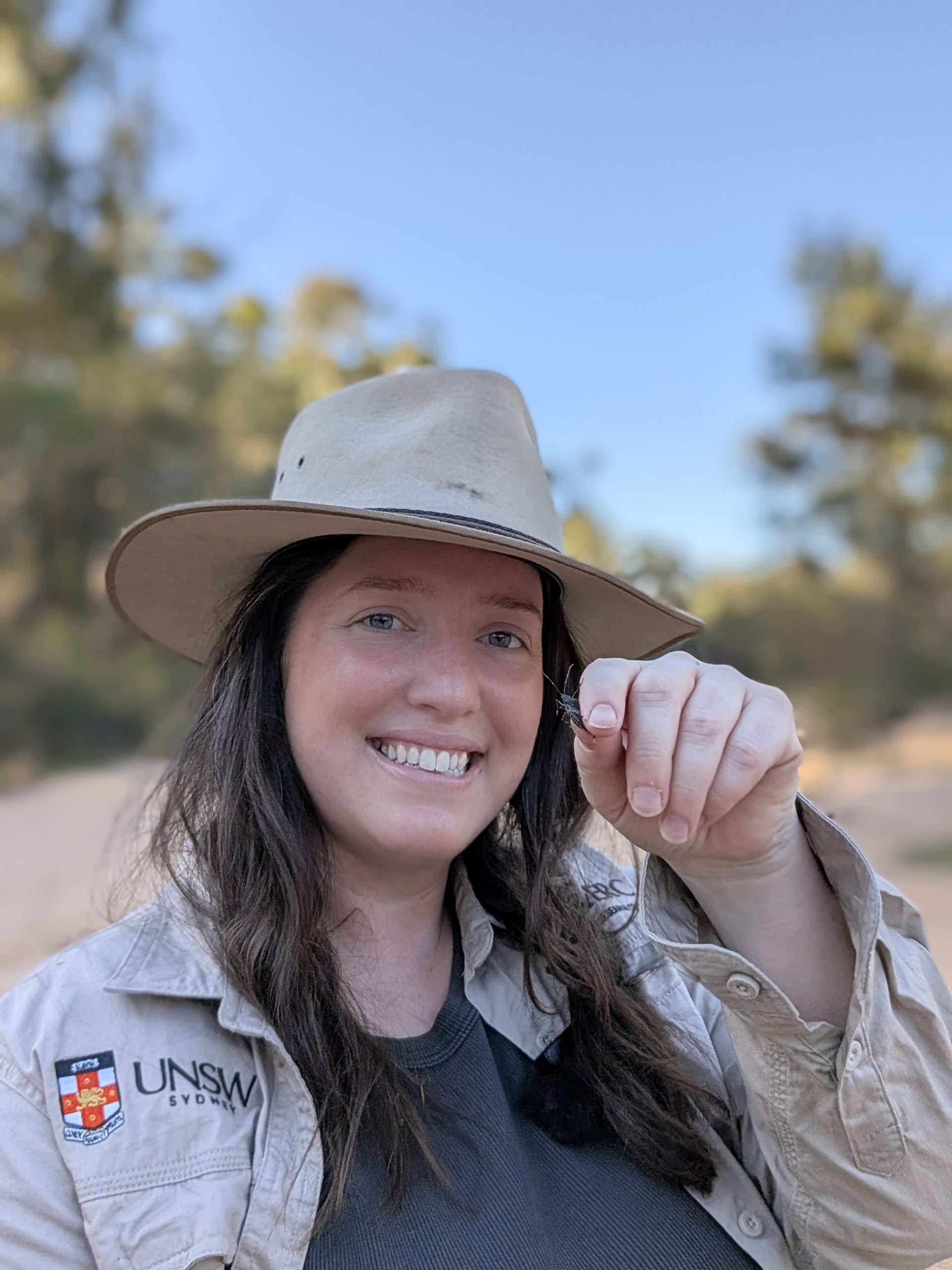
Entomologist Maya Darby holding a prized stinkbug collected on the Pilliga Bush Blitz (image: Bryan Lessard, Bush Blitz).
Bush Blitz Q&A with Maya Darby, UNSW entomologist
What are bugs? Why are they important? And what do they have to do with the colour of birds?
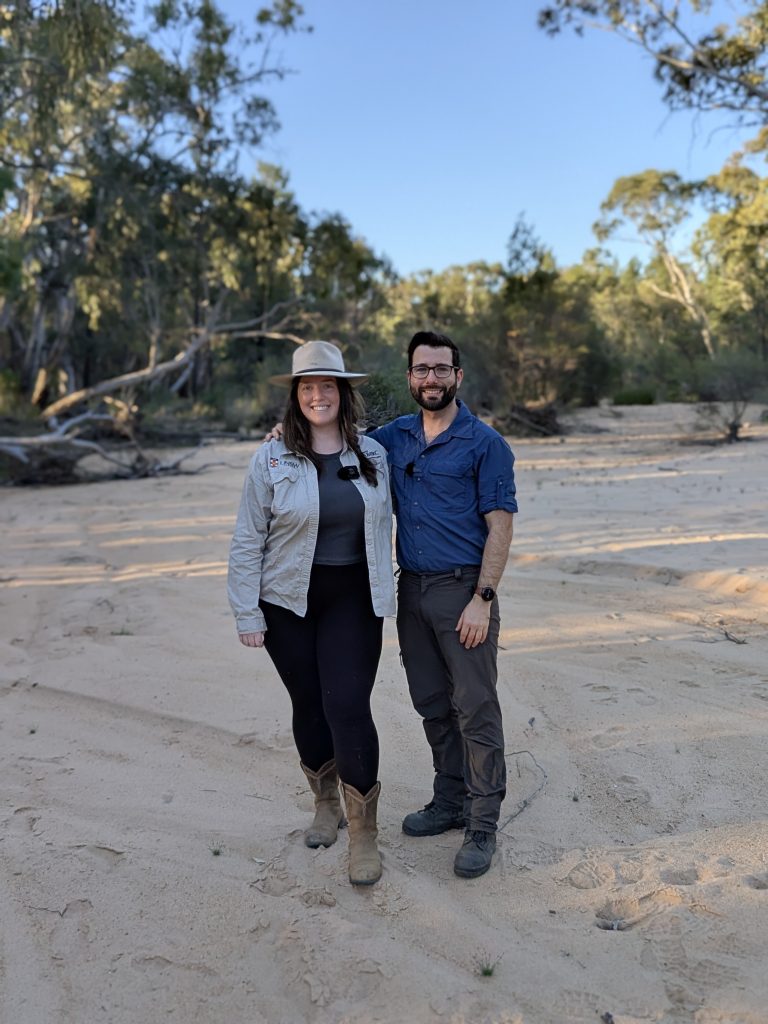
Meet Maya Darby, an Aussie entomologist and PhD student from UNSW on a mission to find species of true bugs (Hemiptera) new to science. Maya recently joined our very own Dr Bryan Lessard, aka Bry the Fly Guy, on a Bush Blitz Q&A in the Pilliga, NSW.
Bry: Why are they called stinkbugs?
Maya: They excrete a very nasty smell to deter animals that might want to eat them.
How did you get into bugs?
I got into bugs after studying ornithology and applied ecology. I just loved coming through forests like this and in the outback, looking for different things that were on plants, and a lot of those things are bugs. Then I started getting interested in the things that birds ate.
How did you get into bugs?
I got into bugs after studying ornithology and applied ecology. I just loved coming through forests like this and in the outback as well, looking for different things that were on plants. And a lot of those things are bugs. Then I started getting interested in the things that birds ate — and a lot of them eat bugs and insects.
Are there any animals that eat bugs?
Lots of animals. Birds, for example, eat bugs, and a lot of birds get their beautiful colours from the colours found in bugs and insects. Some birds get their red orange, pink, and yellow pigments from the bugs and plants they eat. For example, if we eat lots of carrots, you might notice your skin gets a bit of an orange hue. Same for birds.
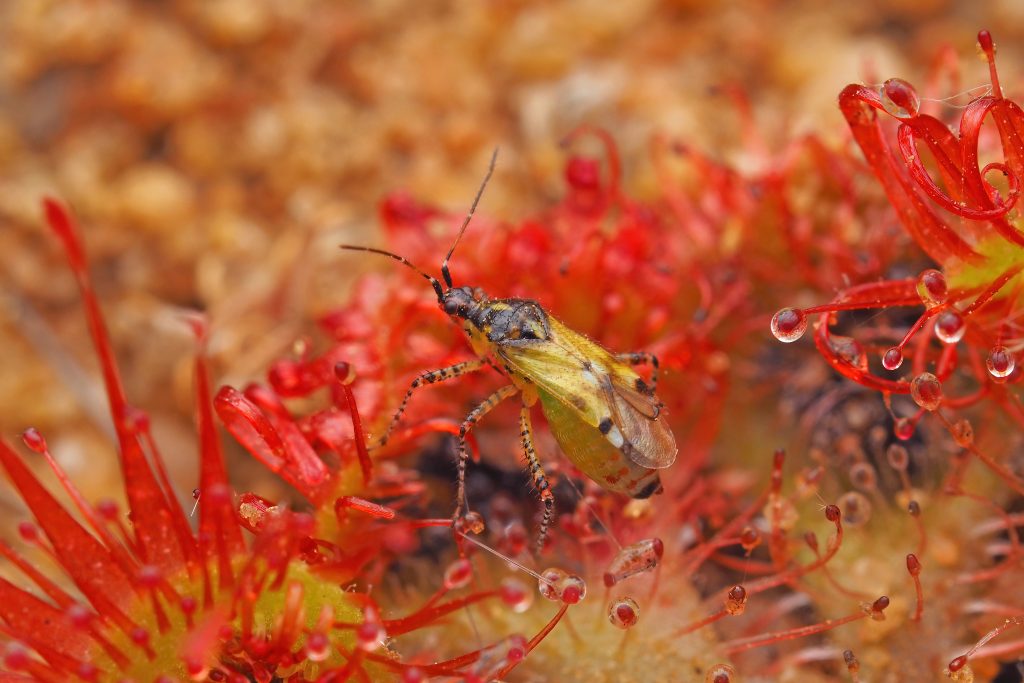
Where can we spot bugs?
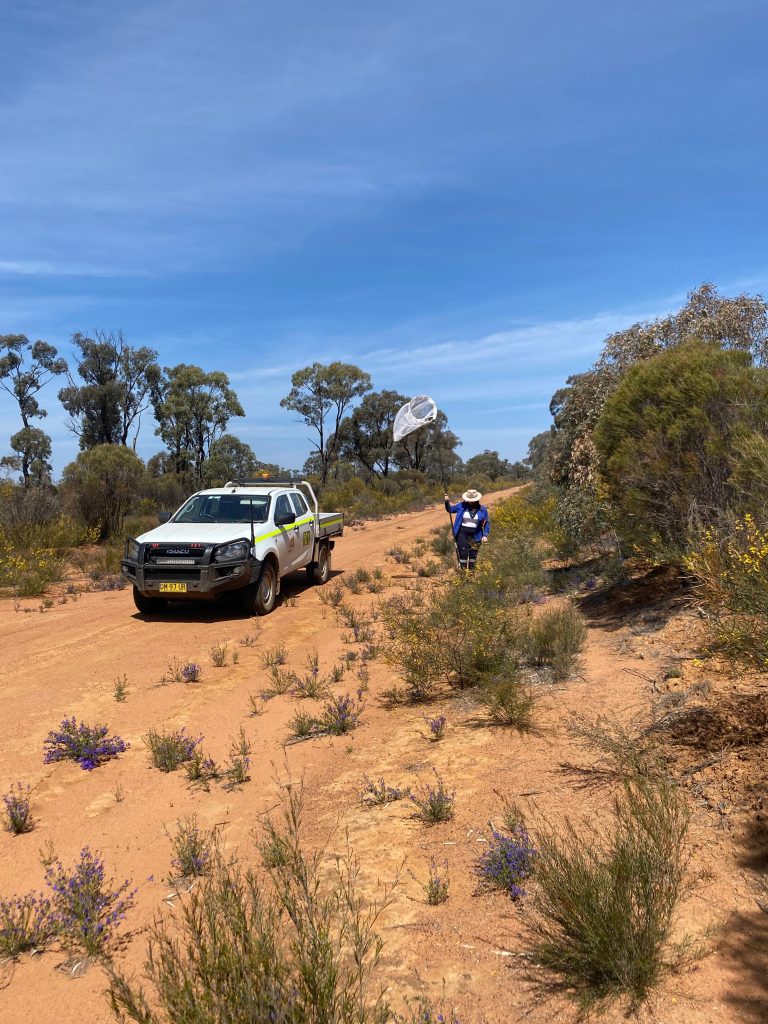
We have a lot of mirids (short for the bug family Miridae) in the Pilliga forest, and they love these flowering plants — you’ll often see them here. They’re very small and green.
Do bugs come in different shapes and sizes?
Yes, they certainly do. We have some very large bugs and we have some very, very tiny bugs.
Do different bugs live on different plants?
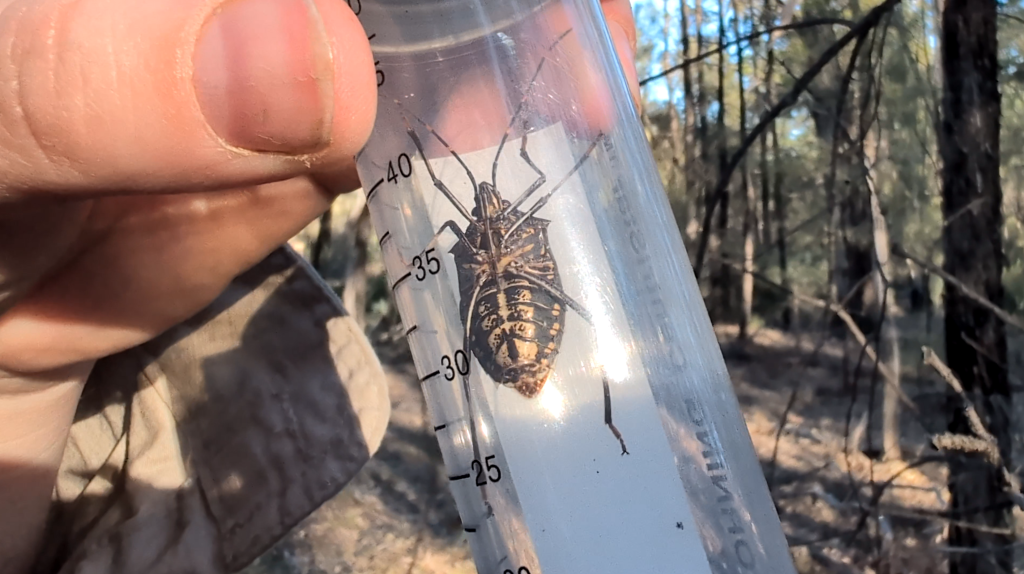
Yes, a lot of bugs will have their own host plant, which they either like to eat from or lay their eggs on. We’ve just grabbed this adult stinkbug from this casuarina — they live throughout the forest living on Casuarina. This one is very dull and dorsoventrally flattened, meaning its body is nice and flat, allowing it to live under the bark.
Is there any reason why bugs like flowers?
It’s a food source for them and their young. It’s also a nice spot to set up home. A lot of them are mating here and they’ll produce eggs.
Do bugs help pollinate?
Definitely. The bugs and beetles are important pollinators in forests, like here in the Pilliga.
You say bugs, but aren’t all insects bugs?
No. When most people refer to bugs in general, they might mean beetles, bugs, insects, spiders or any creepy crawlies. But scientists, when we refer to bugs, usually we’re talking about true bugs.
How do you tell true bugs apart from other insects?
The main way that you can tell is by the long sucking mouth part (called a proboscis). You can see down the centre of its body, through the midline, that’s it’s sucking mouthpart. That’s the kind of mouthparts that these true bugs have. They use this mouthpart as a giant straw to drink from the plant.
Where are some of the best places that bugs live?
Bugs live anywhere there are flowering plants.
How many species of bugs are there in Australia?
There’s so many that we don’t actually know how many there are. We know that in science, we have named about 20% of the species that exist in Australia in terms of bugs and insects. So, there’s a lot more to discover and a lot still to learn.
How do you catch bugs?
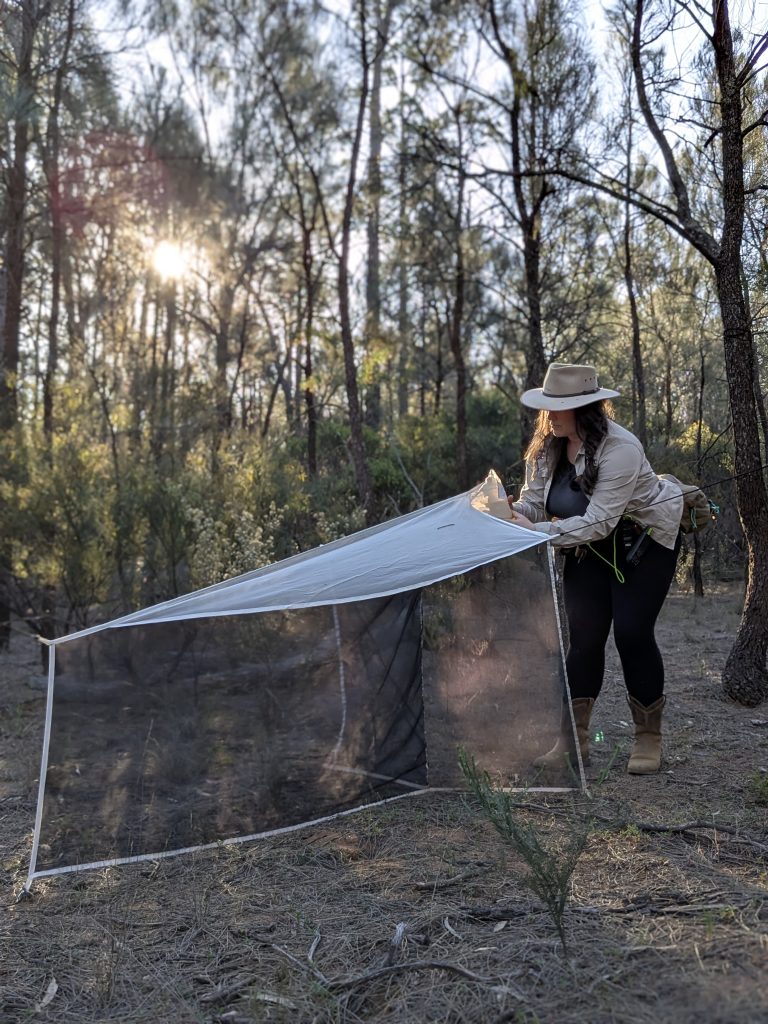
It’s interesting you should ask. I set up a malaise trap earlier in the week, right by the creek line. It looks like a small tent trap and usually you set them up between bug highways. When the bugs fly, they get filtered into the tent and they crawl up and then over the side into a jar that’s filled with ethanol. With methods like this for trapping, it’s easy to find them and see them up close.
What’s been your favourite part about the Pilliga Bush Blitz so far?
I think it’s seeing the amount of biodiversity that’s out here. There’s so many things and I’ve seen hundreds of bugs and insects I’ve never seen before. It’s really exciting.
Have you ever named a species of true bug?
I’ve never named a species, but I think a lot of people on this trip have, which is very exciting for me as an early career researcher and maybe I’ll name one after this trip.
How many species do you think you found on the trip so far?
I think I found at least 15 species and maybe even a new species.
Why is it important to name species?
Well, at the moment when we look at invertebrates in Australia, we have named only 20% of all the species that we have, and we have a lot of threats to those species. There’s a concern that before we name something, it could actually go extinct. We’ve got a lot of hardworking scientists on Bush Blitz trips like this, working to name those species to prevent that from happening.
Do you like being a biologist?
It’s amazing. It’s a bit of an adventure going on collecting trips. We get to work in beautiful places like the Pilliga, but we also get to do really exciting stuff in the lab when we get back home.
Do you have any advice for younger Maya who might be thinking of becoming a scientist?
I would say, give it a go. You are capable. You’ve got this. You are passionate — and passion can take you a very, very long way in ecology or any environmental science field.
How would you encourage people to search for bugs in their backyard?
Well, there’s lots of ways. The main way would be to have a look at anything that’s flowering, especially if you’ve got native plants in your garden. Anything that’s got a flower, usually the bugs are there. They might be mating, they might have eggs or young, and just having a look, turning over some leaves, you can see what might be hiding. They’re all here, we just have to have a keen eye.
Watch Maya and Bry’s full adventure in the Pilliga here:
This interview took part on the lands of the Gamilaraay, Gamilaroi and Gomeroi peoples in the Pilliga in New South Wales, Australia. We pay our respect to their elders past and present and recognise their deep understanding and connection to biodiversity living on Country.