
Biodiversity (biological diversity) is the variety of all living things on earth, including plants, animals, fungi and microorganisms. Biodiversity is essential for our existence but it is under threat.
The Bush Blitz program helps raise awareness of Australia’s biodiversity while working with experts to improve our knowledge of it. We help scientists answer fundamental questions about what lives in Australia and where species occur. This knowledge supports conservation planning, land management, biosecurity and environmental policy. By supporting scientists to document and name species, we help ensure Australia’s unique biodiversity is understood, valued and protected for future generations.
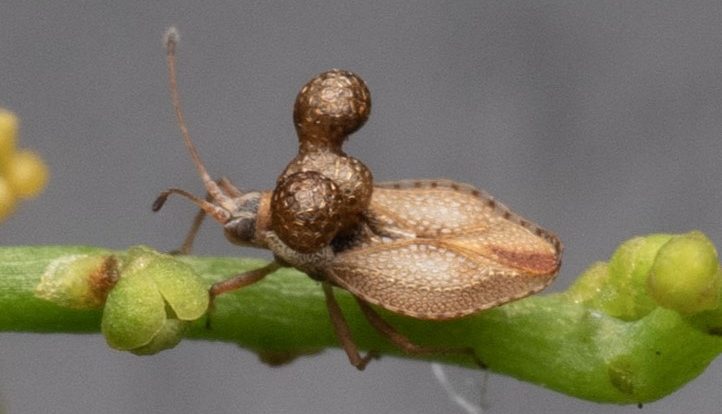
Biodiversity is essential for our existence
As well as being valuable in its own right, biodiversity provides the fundamental building blocks for the many goods and services a healthy environment provides. Things like clean air, fresh water, food and new medicines inspired by nature, as well as many other products such as timber and fibre. Spending time in nature is also important for our personal and social wellbeing.
Biodiversity is in decline
Over the last 200 years, Australia has suffered the largest documented decline in biodiversity of any continent. Despite efforts to manage threats and pressures to biodiversity, it is still in decline.
The main threats to our biodiversity are:
- loss, fragmentation and degradation of habitat
- the spread of invasive species
- unsustainable use of natural resources
- climate change
- inappropriate fire regimes
- changes to the aquatic environment and water flows
Source: DCCEEW website, accessed 31 August, 2026
Australia is one of the world’s most biologically diverse countries – scientists estimate we have between 580,000 and 680,000 species. Yet only 1 in 4 plants and animals have scientific names and some species may become extinct before we even know they exist. This lack of knowledge creates a major challenge for conservation. Before we can protect a species, we first need to know what it is.
We need to know it to protect it
Before a species can be protected, scientists need to know what it is.
Taxonomy is the science of identifying, naming and sorting living things. Taxonomists sort similar species into groups – this is called “classification”. Every species needs a unique scientific name so researchers around the world know they are talking about the same thing. Without a scientific name, it can be difficult to share information, track populations, assess conservation status or develop management plans.
Species cannot be assessed and listed as threatened without a formal scientific name. So, scientifically naming a species is the first step to protecting and managing it.
Large parts of Australia have never been comprehensively surveyed by scientists.
Around 45% of the Australian continent and more than 90% of Australia’s marine areas remain biologically under-surveyed. As a result, we still lack basic information about what species occur in many regions.
The Bush Blitz program helps change that.
How Bush Blitz helps
Bush Blitz coordinates large-scale biodiversity surveys in data-scarce areas, helping build the evidence needed for better environmental management and decision-making.
By bringing together scientists, Aboriginal and Torres Strait Islander peoples, land managers and local experts, Bush Blitz aims to document the unique species living in Australia and uncover species new to science.
We focus on groups that are often overlooked, including insects, spiders, snails and other invertebrates, fungi, lichens, mosses and algae. These organisms play essential roles in healthy ecosystems, yet many have never been recorded or studied.
The specimens, records and data collected through Bush Blitz become part of Australia’s national scientific collections and knowledge base, supporting research for decades to come.
After the fieldwork, we provide taxonomists with funding to describe and name species collected on a Bush Blitz so they can be formally recognised in the scientific literature and legislation.
Bush Blitz surveys have uncovered thousands of species new to science and continue to improve our understanding of Australia’s biodiversity. The information collected supports scientific research, conservation planning and environmental management.
Naming and identifying native species also helps us more rapidly identify introduced species that are a biosecurity risk to Australia.
Understanding biodiversity also helps us spot invasive species
When scientists can accurately identify native plants, animals and fungi, they are better able to recognise introduced species that may threaten ecosystems, agriculture or human health.
Taxonomy provides the foundation for detecting and responding to biosecurity risks, helping Australia identify new pests and emerging exotic species more quickly and reliably.
Every species identified through Bush Blitz adds to our understanding of Australia’s biodiversity. By documenting and naming species, Bush Blitz is helping build the knowledge needed to protect Australia’s unique biodiversity.